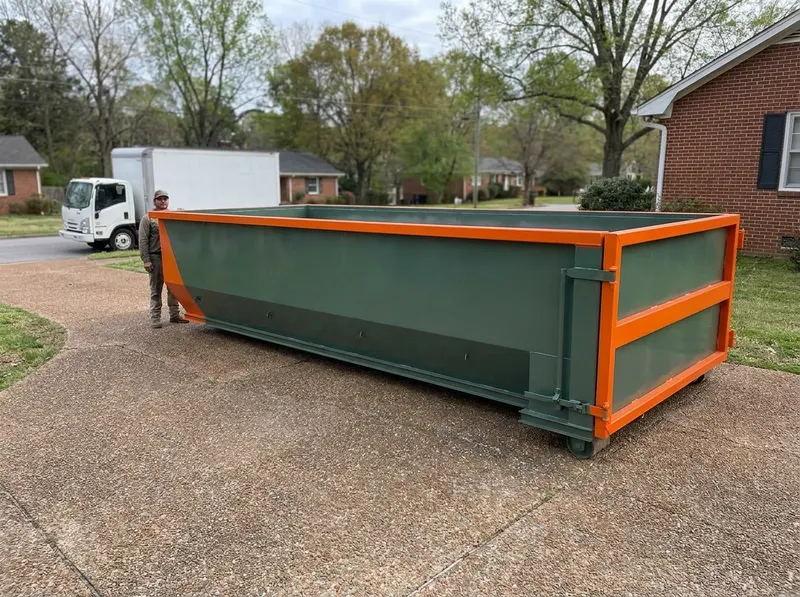
The 40-yard container is the biggest roll-off in the Boxwood Dumpster Rental lineup, sitting above the 10-yard ($595), 15-yard ($650), 20-yard ($695) and 30-yard ($795). Step 1, confirm the job: a 40-yard fits a roof…
The 40-yard container is the biggest roll-off in the Boxwood Dumpster Rental lineup, sitting above the 10-yard ($595), 15-yard ($650), 20-yard ($695) and 30-yard ($795). Step 1, confirm the job: a 40-yard fits a roof tear-off over 30 squares, a full kitchen-and-bath gut, a two-story estate cleanout in Riverview, or a Southside commercial build-out. Step 2, check the ground: the container needs a flat, hard space about 22 feet long, a wide driveway, a gravel pad, or a jobsite lot works, while a narrow St. Elmo alley usually does not. Step 3, schedule the drop. Step 4, load it by hand over your rental window. Step 5, call for pickup and the container is hauled to a permitted transfer station. A dumpster rental is not junk removal, you load the container yourself, which is why the flat rate stays well below a full-service haul.
Decision-fit matters because the 40-yard is often larger than a project needs. A single-room cleanout or a small bathroom remodel fits a 10-yard; a kitchen remodel or a 1,500 sq ft reroof fits a 20-yard or 30-yard; the 40-yard earns its size on whole-structure demolition, multi-room gut jobs and heavy mixed debris where swapping a smaller box twice costs more than one big drop. The trade-off is footprint: the 40-yard needs real driveway or lot space and takes the volume of about 16 pickup loads, so on a tight Highland Park lot a pair of 20-yards sometimes places better than one 40. A crucial non-obvious point, tall, heavy, dense loads like concrete, dirt, brick and shingles are far heavier than their volume suggests, so for roof tear-offs and masonry a 30-yard loaded flat is often the right call even when a 40 would hold the pile.
Weight and material rules apply the same way they do on any Hamilton County roll-off. Prohibited items follow standard transfer-station policy and local landfill guidance: no wet paint, no automotive fluids, no tires, no refrigerators or appliances holding refrigerant, and no household hazardous waste such as solvents, pesticides and pool chemicals, the household hazardous waste rules from the EPA explain why those stay out of a mixed-debris bin. Electronics follow separate handling under electronics recycling guidance, and shingles and clean fill are handled under construction and demolition materials recovery practices. Tennessee waste streams are overseen by the Tennessee Department of Environment and Conservation, and our team handles separate paint and chemical drop-off through its county government services. Reuse options for salvageable building materials are listed on Earth911 recycling search.
Jobsite placement and safety track recognized standards. On an active commercial site the container is a load zone, so crews working around it should follow OSHA construction jobsite practices and keep debris below the top rail for safe transport. Roofing debris staging falls under broader roofing industry guidance from the national association, and demolition sequencing before a container drop should respect utility locates through call 811 before any excavation. Dumpster placement on a public street rather than private property in neighborhoods like Brainerd or East Ridge can require a permit from the City of Chattanooga, and the roll-off industry framework is maintained through the waste and recycling association. For general recycling and disposal background, the state's materials-management pages describe where mixed C&D loads end up after pickup.
Every job gets a firm, written price after an on-site visit.
Tell us about your 40-yard dumpster rental job in Chattanooga and we'll send a clear, written quote, usually the same day.
 Boxwood Dumpster Rental